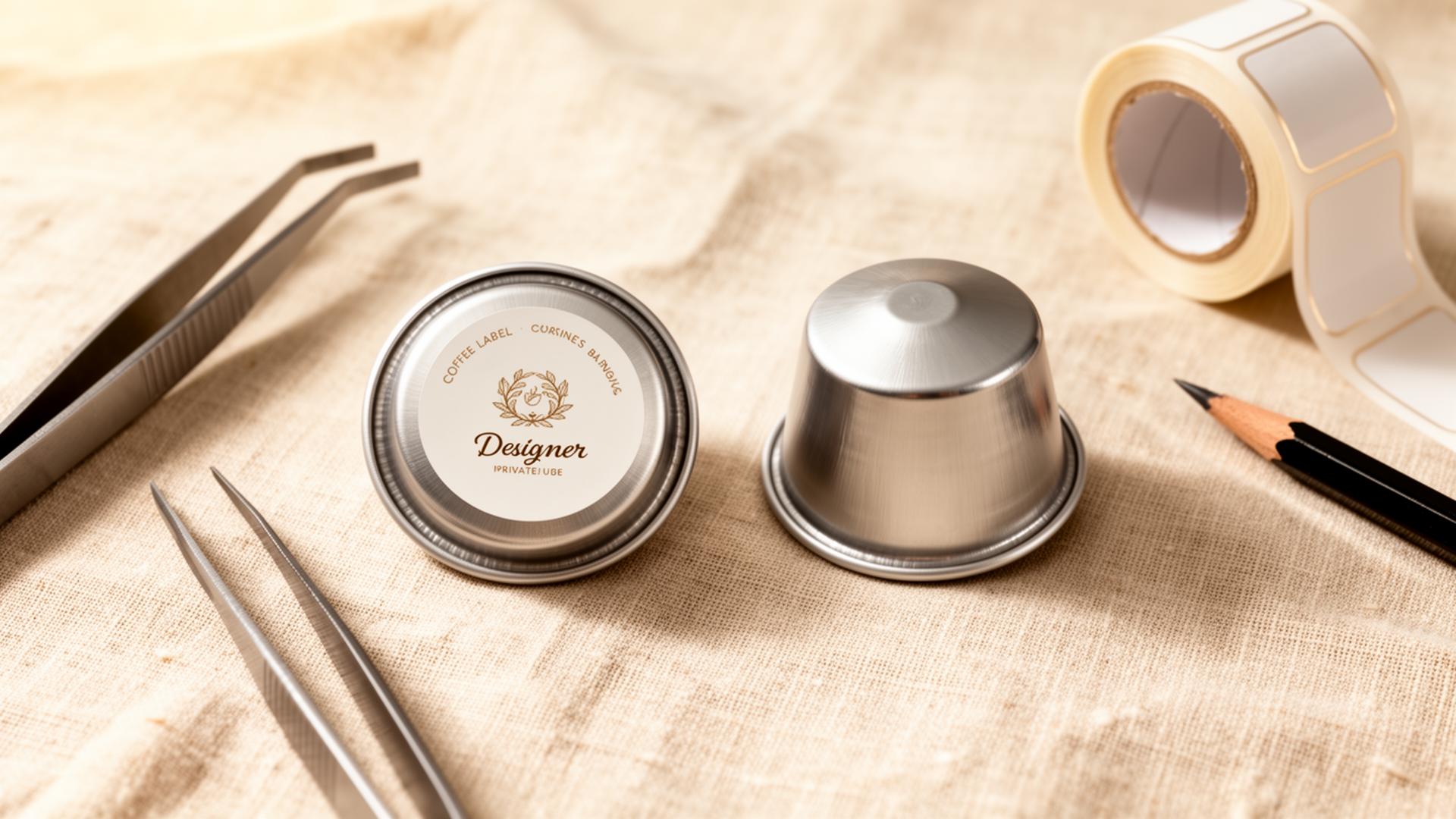
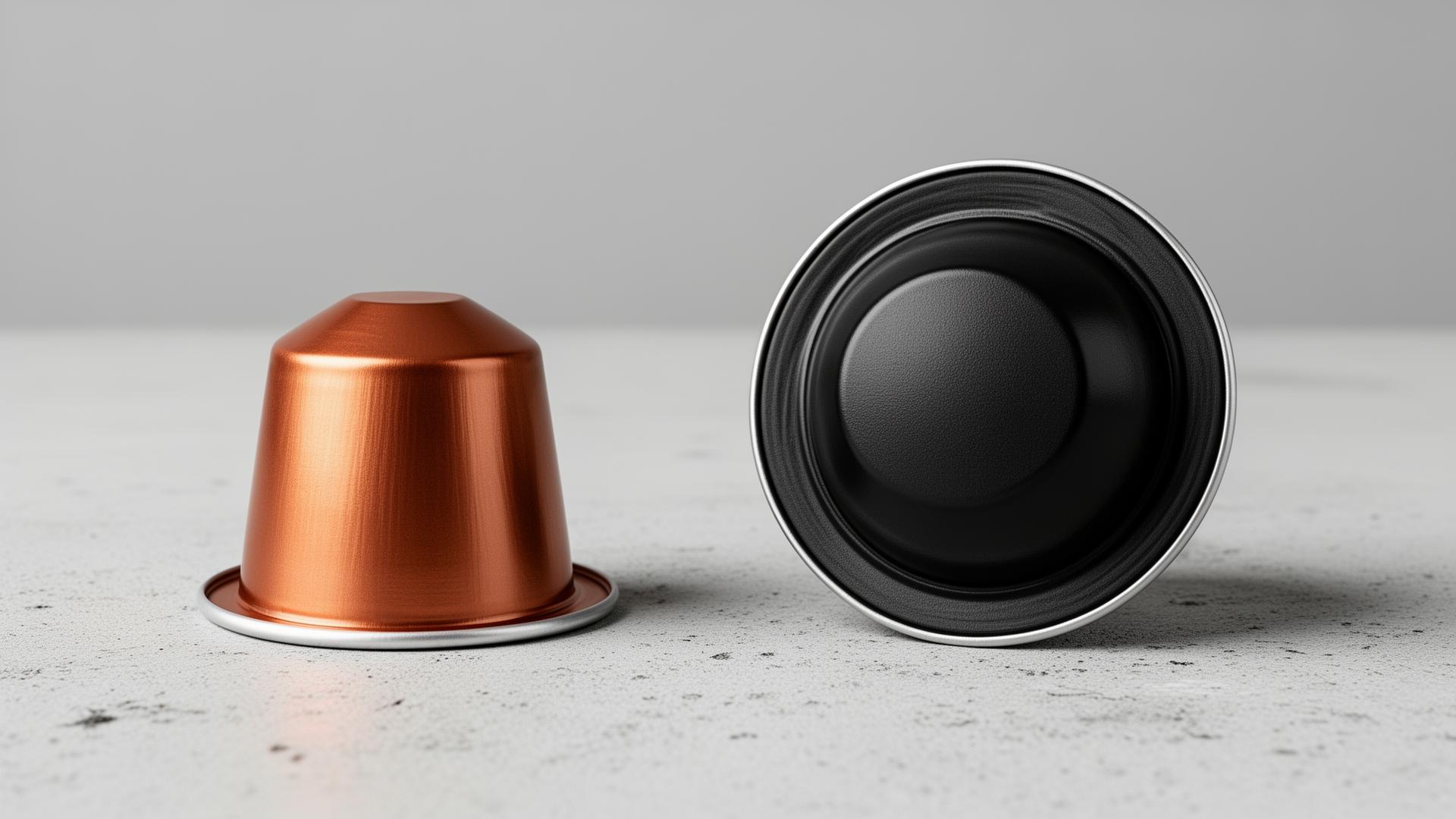
Launch Your Own Coffee Brand with Private Label Coffee Capsules
Learn how to launch a coffee brand with private label Nespresso-compatible polypropylene capsules: process, pricing, MOQ, labels and sales.
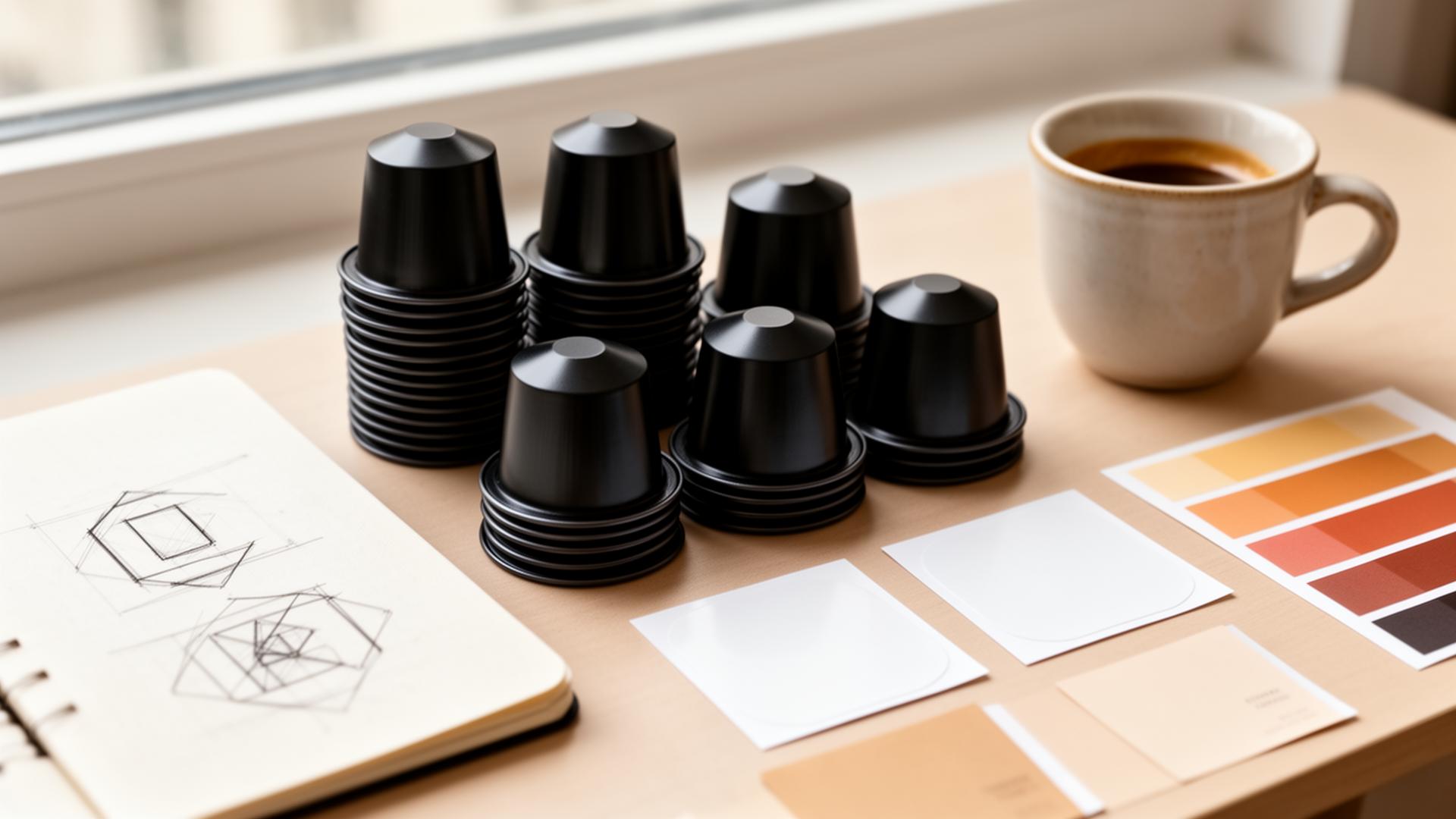
Starting your own coffee brand does not have to begin with a café, a roastery, or a large production facility. For many entrepreneurs and established brands in Denmark and across the Nordics, private label coffee capsules have become the most direct route to market. When the capsules are Nespresso-compatible and produced in polypropylene, you get a format consumers already know, logistics that can scale, and a product that fits D2C, retail, office, hotel, and gift channels alike.
For Nordic brands, the timing is strong in 2026. Customers expect convenience, consistent quality, and clear branding. At the same time, they want more choice than the large standard brands offer. This is where a new coffee brand can position itself with a clear flavour profile, a distinct story, and professional packaging without having to invest in capsule machinery, packing equipment, and food production itself. ATP Coffee in Arnhem, the Netherlands, works with private label Nespresso-compatible polypropylene capsules for European brands and makes it possible to go from idea to pallet on a manageable timeline.
This guide explains how to get started in practice: why capsules are a strong format, which business models work, what the process typically looks like at ATP Coffee, what it costs, which label requirements you need to know, and how to avoid the mistakes many first-time founders make.
Why coffee capsules are the right format for new brands in 2026
Capsules combine three things new brands need: high user convenience, predictable quality, and simple scaling. The consumer gets the same dose in every cup, and the brand gets a product that is easy to explain, sell, and ship.
By 2026, the market has matured further. Many households and workplaces already own capsule machines, so a new brand does not need to educate the customer on an entirely new brewing format. If you choose Nespresso-compatible polypropylene capsules, you are entering an existing behaviour pattern. That reduces friction at the moment of purchase.
There are especially five reasons why the format is attractive for new and existing brands:
- Lower launch complexity than whole beans, which require grinder guidance, brewing recipes, and allow more variation in the final cup.
- Strong brand experience because capsules, boxes, and sleeves provide many touchpoints for design and positioning.
- Good shelf life and consistency when the capsules are packed correctly.
- Well suited to e-commerce due to standardised formats and predictable packing.
- Flexibility in channel strategy from webshop to office, hotel, and gift boxes.
For a startup, this means you can focus on product selection, branding, and sales instead of spending the first 12 months on production infrastructure. For an existing brand, it means you can expand the range with a capsule product that matches customers’ daily routines.
The biggest advantage of private label capsules is not only that you can enter the market faster, but that you can test demand with lower operational risk.
Business models for a Nordic coffee brand with capsules
Private label capsules work best when the business model is chosen early. Many new brands do not fail on taste, but on channel choice. Capsules can be sold through several routes at the same time, but each channel places different demands on price, packing, margin, and reorder frequency.
D2C via your own webshop
D2C is often the most obvious place to start. Here you control the brand story, pricing, bundle structure, and customer data. Capsules are well suited to webshops because they are easy to subscribe to and easy to ship in standard boxes.
Advantages of D2C:
- higher gross margin per order
- direct customer data and feedback
- opportunity for bundles, mix packs, and limited editions
- a good platform for subscriptions
The challenge is customer acquisition. If you do not already have an audience, you should expect ad spend, email flows, and content work to drive repeat purchases.
B2B to offices, retailers, and distributors
B2B provides larger orders and more stable volume. Offices, delicatessens, chains, and regional distributors can be strong customers if your product is delivered reliably and easy to reorder.
Here it is important to have:
- clear carton and pallet units
- commercial price sheets
- sample kits for buyers
- documentation for product and labelling
Hotel minibar and hospitality
Hotels, serviced apartments, conference venues, and premium hospitality are an often overlooked channel. Capsules fit well into minibars, room amenity concepts, breakfast areas, and meeting rooms. A hotel usually focuses on three things: operational reliability, a premium look, and simple replenishment.
If you are targeting hospitality, you should think in terms of smaller pack sizes, clear variant marking, and packaging that looks premium without being impractical.
Subscription as a growth layer
Subscription is especially relevant for capsules because consumption is relatively predictable. Once a customer has found their favourite, you can sell 30, 60, or 90 days of consumption with automatic delivery.
Subscription works best if you have:
- 2-4 fixed signature blends
- a simple pause and skip function
- an incentive such as 10-15% savings or free shipping
- onboarding with a taste test or starter pack
Comparison of models
| Model | Typical initial advantage | Challenge | Best for |
|---|---|---|---|
| D2C | High control over brand and margin | High CAC without an existing audience | New digital brands |
| B2B | Larger orders and repeat purchases | Longer sales process | Established sellers and wholesalers |
| Hotel minibar/hospitality | Premium positioning and visibility | Requires reliable delivery | Lifestyle and premium brands |
| Subscription | Predictable revenue | Requires retention work | D2C brands with a loyal base |
If you are unsure which model to start with, a combination of D2C and selected B2B is often the most robust. It gives you both learning from end customers and volume from business buyers.
Step by step: what the process looks like at ATP Coffee
When you work with a private label manufacturer such as ATP Coffee in Arnhem, the process is typically more structured than many expect. That is an advantage, because as a brand you can plan cash tied up in stock, launch timing, and marketing activities.
1. Brief and positioning
The first step is a clear brief. You do not necessarily need to know every detail, but you should be able to answer the following:
- Who is the target audience?
- Which flavour profiles do you want to sell?
- Which markets will the product launch in?
- Which channel matters most first: D2C, B2B, or hospitality?
- What price level should the end customer see?
The sharper the brief, the faster the manufacturer can suggest relevant blends, packing solutions, and MOQ levels.
2. Bean sourcing and blend selection
The next step is choosing the coffee. This is about taste, price, and supply-chain stability. Some brands want a classic espresso and a lungo as the base, while others want more niche profiles.
The most important thing is not to choose too many variants at the start. Two to four SKUs are often enough for a first launch. A narrow assortment makes stock management, marketing, and reordering significantly easier.
3. Roasting and taste validation
Once the blend is chosen, roast and extraction are tested in the capsule format. Coffee that tastes good as a bean sample does not always behave identically in capsules. That is why testing matters.
Here you should assess:
- crema and cup profile
- intensity and aftertaste
- consistency across samples
- performance in relevant machines
4. Packaging design and artwork
Next comes packaging development. For new brands, this is often where the product becomes real. The design must support positioning and meet labelling requirements. That applies to the box front, side panels, batch information, and any language requirements.
If you want to understand the difference between brand depth and standardisation, you can read the difference between private label and white label coffee capsules.
5. MOQ choice and production planning
MOQ depends on the number of variants, packaging, print setup, and volume. Many first-time buyers think the lowest possible MOQ is always best. In practice, MOQ needs to balance three factors: cash commitment, unit price, and stock horizon.
It can be useful to start with a smaller pilot run. Read more about MOQ, pricing, and pilot runs for coffee capsules.
6. Production and quality control
Once artwork is approved and the specifications are locked, the order goes into production. The capsules are produced, packed into retail units, and assembled into cartons or on pallets as agreed.
7. Delivery to warehouse or 3PL
Finally, the goods are sent to your own warehouse, a 3PL partner, or directly into distribution. For Danish and Nordic brands, ATP Coffee’s location in the Netherlands is practical because deliveries across Europe can often be planned efficiently by road.
Timeline: typically 6-10 weeks from brief to pallet
Realistic expectations are essential. Many founders plan a launch from the day they approve the taste, but forget design rounds, proofreading, transport, and internal coordination.
A typical timeline can look like this:
Weeks 1-2: Brief, flavour direction, and initial quotation
This is where goals, SKUs, expected volume, and price range are clarified. Any sample packs and flavour alignment are initiated.
Weeks 2-4: Samples, feedback, and blend decision
Taste samples are evaluated, and the final direction is set. At the same time, work begins on the packaging brief and label copy.
Weeks 4-6: Artwork, compliance, and order confirmation
Design is finalised, mandatory texts are checked, and the final order is placed.
Weeks 6-8: Production
Capsules are produced, packed, and quality controlled.
Weeks 8-10: Transport and receipt
Pallets are prepared and shipped to a warehouse, distributor, or fulfilment centre.
In practice, 6 weeks can be possible for a simple order with fast approvals, while 10 weeks is more realistic if there are several SKUs, special packaging, or longer decision processes.
Pricing example: a concrete calculation for private label capsules
The price of private label Nespresso-compatible polypropylene capsules depends mainly on volume, blend type, packaging complexity, and print. A useful benchmark for many projects is around €0.18-€0.28 per capsule.
Let us take a simplified example.
Example: 50,000 capsules across 2 SKUs
Assume the following:
- 25,000 espresso capsules
- 25,000 lungo capsules
- polypropylene capsules
- branded retail boxes
- delivery to a Danish warehouse
Possible calculation:
| Item | Example |
|---|---|
| Capsule price ex works | €0.22 per unit |
| Number of capsules | 50,000 units |
| Goods value | €11,000 |
| Design/setup/preparation | €600 |
| Transport to Denmark | €450 |
| Total estimated purchase | €12,050 |
| Effective landed price per capsule | €0.241 |
If you pack 10 capsules per box, that equals 5,000 retail boxes. With a landed cost of around €0.241 per capsule, cost of goods is roughly €2.41 per 10-pack before local warehousing, marketing, fulfilment, and VAT.
If your webshop price is, for example, £4.99 to £5.99 per 10-pack, or if you sell bundles with several boxes, the economics can become attractive, but only if you manage discounts and shipping closely. In B2B, you usually need room for distributor or reseller margin, which places greater demands on your buying level and channel strategy.
What matters is not only the capsule price. You should calculate the full model:
- production cost
- design and startup costs
- freight
- warehousing and fulfilment
- marketing cost per new customer
- discounts and campaigns
- any returns and complaint costs
Label requirements and EU rules for food packaging
When you sell coffee capsules in Denmark or more broadly in the EU, labelling must be correct. The specific requirements depend on markets, languages, sales channel, and product specification, but there are several recurring areas you need to control.
Typical information on the packaging
For most coffee products, you will at minimum need to clarify:
- product name
- net quantity
- ingredient information, if relevant
- responsible food business operator
- durability date or best before
- batch or lot identification
- storage instructions, if relevant
- recycling or material information, if used
- language requirements for the markets you sell in
Important considerations for capsules
For capsules, it is also important that compatibility statements are worded correctly. Nespresso must be treated as a third-party trademark, and compatibility must not be presented in a way that creates doubt about origin.
Practical compliance checklist
Before you approve artwork for print, you should check:
- that all mandatory information is in the correct language
- that net weight and unit declaration match
- that the responsible company is stated correctly
- that batch and date fields are planned
- that compatibility statements are legally defensible
- that barcodes and SKU structure are validated
- that claims such as sustainability or premium quality can be documented if used
Many mistakes arise not in production itself, but in the final proofreading round. That is why it is wise to have both a commercial and regulatory review of label materials before the order is released.
Marketing and sales once the capsules are in stock
Once the goods have landed, the part many underestimate begins: creating steady demand. A good product does not sell by itself. You need a plan for launch, repeat purchase, and channel prioritisation.
Start with a focused launch plan
Instead of trying everything at once, choose a narrow first focus. For example:
- one primary target group
- two best-suited SKUs
- one main channel and one secondary channel
- one clear message about taste or convenience
Build sales materials early
You should have the following ready before the stock arrives:
- product images and lifestyle photos
- short taste descriptions
- landing page with FAQ
- email flow for welcome and reorder
- sample packs for B2B leads
- simple wholesale price sheets
Work actively on reordering
Capsules are a repeat purchase. That makes retention more important than for many other food products. Set up reorder flows based on expected consumption, and consider bundles or subscription to increase lifetime value.
Hospitality and B2B require different tools
If you are targeting hotels, offices, or retail, attractive branding alone is not enough. You must be able to answer questions about MOQ, delivery, pack units, shelf life, and logistics quickly and accurately.
Common mistakes first-time founders make
Many of the same patterns recur when new coffee brands launch capsules. Fortunately, most mistakes can be avoided with better planning.
Too many SKUs at launch
A broad assortment looks ambitious, but it spreads stock, budget, and attention. It is better to start with fewer products and expand once you have data.
Too little focus on unit economics
A good purchase price is not enough. If your CAC is high, or you offer deep discounts to win the first order, margin can disappear quickly.
Underestimating artwork and compliance
Delayed labels and labelling errors cost time. Get legal and practical requirements under control early.
No plan for reordering
Many focus on launch, but not on months two and three. Capsules work best when you think in repeat purchases from day one.
First order too large
It sounds attractive to chase the lowest unit price at high volume, but if product-market fit is not proven, a large first order can become expensive learning.
Why a pilot run is often better than a large first order
A pilot run gives you the chance to test taste, packing, price position, and sales messages in the market with lower risk. You get real customer data instead of assumptions.
The benefits are clear:
- less capital tied up in stock
- faster feedback from customers and B2B buyers
- opportunity to adjust design or blend
- lower risk of being stuck with too many slow-moving SKUs
Yes, a smaller run can mean a slightly higher price per capsule. But that added cost may be much cheaper than producing too much of the wrong product. For first launches, learning is often more important than maximum scale.
Next steps
If you want to launch your own coffee brand with private label Nespresso-compatible polypropylene capsules, the most practical route is to start with a clear brief, a narrow assortment, and a realistic pilot run. That gives you better control over the product, cash tied up in stock, and the launch.
ATP Coffee in Arnhem can be a relevant production partner for Nordic brands that want to get to market quickly with professionally produced capsules and a structured process from sourcing to delivery. Before placing a large order, you should validate taste, packing, price, and channel response on a smaller scale.
If you want to assess what fits your brand, channel, and budget, the next logical step is to book a pilot run.
Frequently asked questions
- What is a realistic MOQ for private label coffee capsules?
- MOQ depends on the manufacturer’s setup, the number of SKUs, the packaging type, and how much customisation you want. For a new brand, it is often wise to choose a moderate first order or a pilot run so you can test demand before scaling. A lower MOQ usually means a higher unit price, but it reduces capital tied up in stock and inventory risk. The right MOQ is therefore not necessarily the lowest or highest one, but the one that fits your channel strategy and your sales forecast for the first 3-6 months.
- What do private label Nespresso-compatible polypropylene capsules cost per unit?
- As a practical benchmark, many projects fall around €0.18-€0.28 per capsule depending on volume, coffee selection, packaging, and the complexity of printing and packing. On top of that, there may be startup costs, design setup, transport, and warehousing. The best way to assess the economics is to calculate the full landed cost per capsule or per 10-pack and then compare it with your planned selling price in D2C or B2B. A low capsule price is only valuable if the overall business model works.
- What lead time should I expect from idea to finished pallet?
- For many projects, 6-10 weeks is a realistic range from the initial brief to completed delivery. The shorter end requires fast decisions, few SKUs, and simple packaging. If you are working with several variants, many proofreading rounds, or special packaging solutions, you should expect a longer process. The timeline usually includes brief, samples, taste approval, design, label checks, production, and transport. It is wise to plan your launch with a buffer so you do not lock campaigns or sales activities to an overly optimistic date.
- Can I get my own design and flavour profile?
- Yes, that is the core of private label. You can usually work with your own visual identity, colours, texts, and packaging expression, and in many cases also with a flavour profile that fits your target audience and price position. However, it is important to keep the ambition level realistic in the first production run. The more special requests you add from the start, the more complex the project becomes. Many brands get the best result by starting with a few SKUs and a strong but operationally simple design.
- What information must appear on the label or packaging?
- That depends on the product and the markets you sell in, but you typically need to cover the product name, net quantity, responsible food business operator, shelf life, batch information, and relevant language requirements. In addition, any compatibility statements must be worded correctly because Nespresso is a third-party trademark. If you use claims such as sustainability or premium quality, they should be substantiated. In practice, it is a good idea to review artwork from both a commercial and regulatory perspective before it goes to print.
- What certifications or quality requirements do B2B customers typically ask about?
- B2B customers often ask about product safety, traceability, shelf life, batch control, ingredients, and general quality control. Depending on the customer and market, they may also ask about certifications, manufacturing standards, and documentation for packaging materials. Hospitality and retail often place emphasis on reliable delivery and a consistent product experience, while distributors will also look at logistics data such as carton dimensions and pallet configuration. That is why it is useful to collect key product specifications and commercial data in one simple, professional product sheet.
Ready to talk specs?
Tell us your blend, format and target volume — we'll come back with a pilot quote in 24 hours.